Tribit Stormbox Lava vs Rode Podmic Review: Performance, Price, and Verdict
I've been using both the Tribit Stormbox Lava and the Rode PodMic for several months in different roles: the Stormbox as my go-to portable speaker for backyard gatherings and morning walks, and the PodMic as my primary microphone for recording solo podcasts and livestreams. On paper they couldn't be more different — one is a Bluetooth speaker designed to move with you, the other is a broadcast-style dynamic microphone intended for voice capture in a studio setup — but I wanted to compare them through a practical lens: how they perform for real people, what compromises each demands, and whether their price-to-performance makes sense in 2026.
Why I bought both
I bought the Stormbox because I wanted a rugged, punchy Bluetooth speaker that I could honestly use outdoors without worrying every time a friend spilled a drink. I bought the PodMic because I wanted a modern, affordable dynamic mic that would give my voice presence on podcasts and streams without the fussiness of condensers in an untreated room. After months of use in different environments — indoors with acoustic treatment, in my untreated home office, outdoors, and on-the-go — what I found was a clearer picture of what each product excels at and where each frustrates me.
Tribit Stormbox Lava — What I experienced
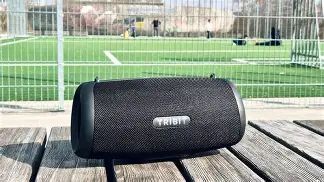
First impressions: the Stormbox Lava felt solid in the hand and pleasantly heavy for its size. I used it on patios, in a small apartment, and tucked into a backpack on hikes. Pairing via Bluetooth was straightforward and fast; I appreciated that it reconnected reliably to my phone and laptop without a lot of fiddling.
Sound and performance: in my experience, the Stormbox delivers a larger-than-expected low end for a portable speaker. The bass is punchy and enjoyable for party tracks and electronic music. Midrange performance is competent — vocals sit forward enough to be intelligible — but I noticed the speaker can sound a bit colored when I push it at high volumes: highs get a touch forward and cymbals can feel brittle in busy mixes. For casual listening and outdoor use, that tradeoff is acceptable; for scrutinizing studio recordings, it’s obvious this is optimized for fun and impact rather than neutral monitoring.
Battery and portability: I typically got roughly a full day of playlists with moderate volume during weekend use — in practical terms, that meant I could use it for several hours at a time across the day and only need to charge overnight. The housing resisted splashes and light rain during a couple of impromptu pool-side sessions, which mattered to me more than I expected.
Build and extras: I liked the tactile controls and the included strap for carrying. The whole unit has a slightly aggressive aesthetic that fits outdoor gear. One thing that bothered me was the speaker’s passive radiator grill: on rough surfaces or when shoved in a bag, it picks up scuffs more than I prefer. Also, the EQ in the companion app is basic; I found myself tweaking manually on source devices instead.
Tribit Stormbox Lava — Pros & Cons
- Pros: Punchy bass and satisfying volume for its size; reliable Bluetooth pairing; rugged and splash-resistant; very user-friendly for non-technical users.
- Cons: Can sound colored at high volumes; mid/high detail lacks the refinement of higher-end portable speakers; app EQ is limited; exterior shows wear over time.
Rode PodMic — What I experienced
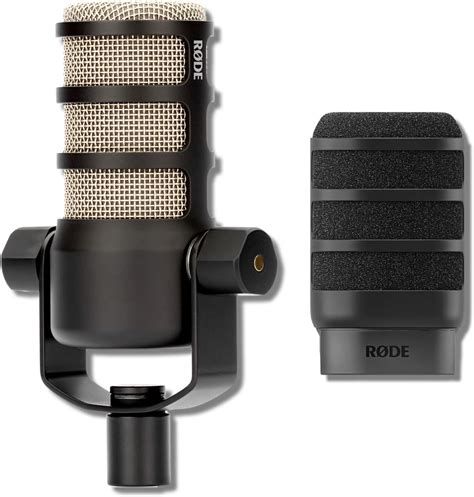
I've been using the PodMic with a modest audio interface and a boom arm in my home studio. The PodMic is unapologetically built like a tank: it has a dense, all-metal body that feels durable and weighted. Mounting was simple and the integrated swivel mount is solid — I didn't experience any sagging over months of daily use.
Sound and performance: for spoken-word applications, the PodMic impressed me with a warm, present character. When I recorded my podcast episodes, the voice came through with body and a sense of proximity that translates well over headphones and cheap laptop speakers. I noticed a natural midrange presence that made me use less post-processing than with a condenser I used previously. The built-in pop filter does a good job on plosives, though close-mouth techniques still helped for those “P” words.
Gain and setup realities: what I found was that the PodMic needs a decent amount of clean preamp gain. Paired with my basic audio interface, I sometimes pushed the interface gain knob higher than I'd like, which raised the noise floor slightly. Adding a clean inline preamp (a mic activator) tamed that problem, but it's an extra purchase that some buyers might not anticipate. If you plan to use the PodMic directly into a USB mixer with plenty of gain, this won't be an issue, but in my experience it's a practical consideration for budget setups.
Durability and handling noise: the PodMic's internal suspension reduces handling noise far better than I'd expected. I could adjust the mic on the boom without recording annoyances. However, the microphone is heavy; I had to check that my boom arm and shock mount were rated for its weight. One small disappointment: there’s no built-in high-pass or pad switch, so dealing with extremely loud sources or nearby window/traffic rumble requires processing on the interface or in software.
Find top-rated Audio & Headphones products at great prices.
View Offers →Rode PodMic — Pros & Cons
- Pros: Warm, broadcast-friendly voice capture; excellent build quality; integrated pop-filter and internal shock mounting; great value for dedicated spoken-word recording.
- Cons: Requires a decent preamp or interface with gain; heavy (check boom arm compatibility); not versatile for musical detail compared to studio condensers; no onboard controls like pad or HPF.
Side-by-side comparison
Comparing a portable Bluetooth speaker to a broadcast microphone is a bit like comparing apples to orange mics, but it’s useful when you’re thinking about "value for your specific need." Below is a practical comparison table reflecting my months of hands-on use.
| Category | Tribit Stormbox Lava | Rode PodMic |
|---|---|---|
| Primary use | Portable music playback — outdoor/indoor casual listening | Spoken-word recording — podcasts, streaming, broadcasting |
| Connectivity | Bluetooth (easy pairing), auxiliary input on some units | XLR only — requires audio interface or mixer |
| Portability | Very portable, rugged, battery-powered | Not battery-powered — studio/desk use |
| Sound signature | Big bass, fun, colored at high volumes | Warm, mid-forward — optimized for voice |
| Ease of use | Plug-and-play over Bluetooth | Needs audio interface and proper gain staging |
| Durability | Rugged housing; splash-resistant | Solid metal build; studio-grade |
| Value for price | High for portable listening | High for podcast mics but adds cost for interface |
How they performed in real scenarios
Here are a few practical situations I tested them in.
Outdoor party / backyard BBQ
Stormbox: this is where the Tribit shines. I brought it to two small gatherings and it filled the backyard nicely without distortion at social volumes. I appreciated the battery life and splash resistance; once I accidentally left it on the edge of a table in light rain and it kept working.
PodMic: irrelevant for this use case unless I wanted to record voiceover over music — the PodMic needs a powered interface and was not suited to being a portable music source.
Recording a podcast episode
Stormbox: I used the Stormbox to play reference tracks while mixing one episode, and it was useful for quick checks of how podcast promos would sound on consumer speakers. But as a monitoring tool, it’s too colored and bass-heavy to be trustworthy.
PodMic: this is where the PodMic came into its own. My episodes sounded warm and intimate. What I noticed was that guests' voices recorded through similar dynamic mics needed less EQ to sit well, which saved editing time. One annoyance: when a guest was quieter, I had to ask them to speak up because pushing preamp gain too far increased background noise.
Streaming & live calls
Stormbox: served well as desktop audio for background music during breaks but lacks the stereo imaging and fidelity I’d want for monitoring music cues.
PodMic: performed reliably on calls and streams, and viewers commented that the voice sounded "full" compared to previous streams. Again, the need for a proper interface was the only roadblock on the budget setup.
Buying guide — how to decide
If you’re choosing between these two devices, ask yourself what you actually need. I wrote this guide from my experience to help you pick the right tool and avoid common oversights.
Find top-rated Audio & Headphones products at great prices.
See Deals →Questions to ask
- What is your primary use? Music playback vs voice recording are different worlds.
- Do you need portability and battery power, or is this for a fixed desk/studio setup?
- Are you comfortable buying and configuring extra gear (interfaces, cables) if needed?
- Do you prioritize ease of use over absolute sound neutrality?
If you want a portable speaker (choose the Stormbox if...)
- You want something rugged and splash-resistant for outdoor use.
- You value punchy bass and high output for parties or social settings.
- You prefer plug-and-play with Bluetooth and minimal setup hassle.
- You’re okay trading some detail and neutrality for fun, impactful sound.
If you want a microphone for podcasting/streaming (choose the PodMic if...)
- You record spoken word — podcasting, streaming, voiceovers — in a home studio.
- You already have or are willing to buy an audio interface and a proper boom arm.
- You want a durable mic that handles plosives and handling noise well.
- You prefer a mic that gives you a polished, broadcast-ready voice without over-processing.
Budget considerations
What I had to budget for beyond the initial purchase:
- For the Stormbox: maybe a spare charging cable or protective case if you’re rough with gear. No other major costs.
- For the PodMic: an audio interface (or a preamp), an XLR cable, and a boom arm/shock mount rated for the mic’s weight. If your interface is low-gain, consider a clean inline preamp/activator. Factor these into the overall cost — they’ll often double or triple the total outlay if you’re starting from zero.
Final verdict — performance, price, and who should buy which
After several months of hands-on use, my honest takeaway is this: both products deliver excellent value — but for very different people.
If your world is mobile, social, and casual — you want something that’s easy, loud, and forgiving — the Tribit Stormbox Lava is a smart buy. In my experience it’s fun, dependable, and tough enough to not worry about everyday knocks and splashes. I appreciated how it made small gatherings feel lively without any fuss. The tradeoff is fidelity: if you’re an audiophile or you need neutral monitoring, this isn't your tool.
If your focus is spoken-word production — podcasting, streaming, or any voice-first content — the Rode PodMic stands out for offering a broadcast-ready sound at a sensible price. In my recordings it produced a warm, present vocal tone that required less corrective EQ than my previous mic. The caveat is setup complexity: plan for an interface, good gain staging, and a sturdy boom. The PodMic won't magically solve bad room acoustics, but paired with a decent environment and preamp, it makes voice capture easy and reliably good.
Which one would I recommend if you can only pick one? That depends entirely on your use case. For portability and music: Stormbox. For recording and professional-sounding voice: PodMic. If you can afford both, I would happily keep both in my gear rotation — the Stormbox for social playback and quick reference, the PodMic for anything that needs to sound like a produced piece of content.
One last practical note from my experience: plan for the extras. A speaker is mostly self-contained. A studio mic is not. I underestimated how much difference a clean preamp made with the PodMic; budgeting for that made my recordings noticeably better and reduced the need for post-processing. Conversely, I was pleasantly surprised by how much joy the Stormbox added to low-effort social audio without any accessories.
Conclusion
Both the Tribit Stormbox Lava and the Rode PodMic are purpose-built devices that deliver what they promise. In my time with them, each proved to be a reliable companion in its domain: one for movement and fun, the other for focused, broadcast-style voice capture. What I found was that buying the right tool for the job mattered more than any single spec or marketing blurb. Choose based on how you actually make and consume sound, and you’ll be satisfied. In my experience, they each earned their place on my shelf — for very different reasons.