Should You Buy the Nuraphone Wireless in 2026? A Deep Dive
Introduction — my experience with the Nuraphone Wireless
I've been using the Nuraphone Wireless as my daily headphones for the better part of six months. I bought them expecting the unusual hybrid design and the personalized sound tuning that made Nura famous. Over those months I used them for work calls, critical listening, commuting, and long evening listening sessions. I wanted to find out whether the Nuraphone Wireless still makes sense in 2026 — with more competitors, many firmware updates, and shifting expectations for battery life and active noise control.
In this article I'll walk through my personal experience: what I liked, what annoyed me, how the sound actually behaves after months of use, comfort and fit, battery and connectivity realities, and whether I think they're worth buying now. I'll be candid about small frustrations I ran into and specific things I appreciated — the kind of practical notes I wish I'd had before I bought them.
What the Nuraphone Wireless is trying to do
At a high level, the Nuraphone Wireless continues the company's core idea: measure your hearing and use that measurement to tune reproduction for your ears. The Nuraphone line mixes an in-ear seal with an over-ear cup, aiming to combine personal calibration, tight bass, and strong isolation. The Wireless version adds the conveniences we've come to expect — battery-powered operation, Bluetooth, a companion app with the ear-profile creation, and onboard controls.
First impressions and build
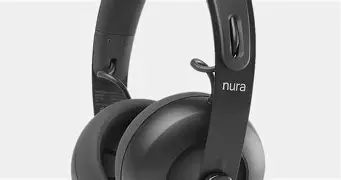
Out of the box the Nuraphone Wireless feels like it was designed with intention rather than to hit a price target. The finish on my unit is matte and understated; the hinge and cup construction feel solid, not plasticky. I appreciated that the cups swivel far enough to lie flat, which helps in travel. One thing I noticed right away was the clamping force — it’s firmer than some over-ear headphones. That firmness helps create the seal that makes the bass feel so controlled, but after three to four hours of uninterrupted listening I did notice pressure around the ears. For short sessions and commuting the fit is fine; for marathon listening sessions I often had to take breaks.
The earcups are deeper than they look in pictures, because of the in-ear element. That means I'm not pressing drivers against the ear, but the shape and internal cavity can trap heat. I noticed my ears warmed up after long summer listening sessions, more than with shallow over-ears. If you run hot in-ear or like to keep long sessions going without breaks, expect a bit more warmth than with typical over-ear cups.
Personalized sound: how real is it?
I ran the hearing test in the companion app multiple times over several months to see how stable the profile would be. The test is straightforward: tones and brief prompts while the device measures otoacoustic responses. What I found was that my “Nura profile” produced bass that felt very present without bloating the mids, and a clarity on voices that made podcasts and vocals comfortable at lower volume. After the first week I stopped tweaking EQ — the profile matched what I expected and remained a reliable starting point.
Important nuance: personalization is not a magic bullet. I still preferred to switch to a flatter profile for reference mixing and critical listening. For everyday music listening, the tuned profile made a big difference for me: songs that sounded thin on other headphones suddenly felt fuller, especially tracks with sub-bass content. I was surprised by how natural kick drums and bass guitars sounded — tight, not muddy.
Sound signature and real-world listening
In my experience the Nuraphone Wireless tends toward a warm, full-bodied signature with an emphasis on low-frequency impact. That's the whole point of the dual-cavity design: get the sensation of bass without overwhelming the rest of the spectrum. If you like pummeling bass at the cost of vocal detail, these won’t make vocals disappear — they keep the mids forward enough for most genres, but the sub-bass is the real show.
Highs are generally clean but not sparkly. I noticed cymbals and high-hat detail were present but sometimes slightly softened compared to very bright reference headphones. The soundstage is wider than I expected for a closed design; imaging is good for closed-back cans — instruments sit in believable places, and I could pick out layers in dense mixes.
I used the Nuraphone Wireless for listening to orchestral music, electronic, indie, and spoken-word. For electronic and hip-hop the bass control and tactile response were delightful. For orchestral works I enjoyed the warmth but at times I wanted a touch more air in the upper mids and treble. For audiophile-critical tasks I wouldn't choose these as my only reference, but for everyday listening, they were consistently engaging.
Find top-rated Audio & Headphones products at great prices.
See Deals →Noise isolation, active noise control, and real environments
The Nuraphone Wireless combines strong passive isolation from the in-ear seal plus the over-ear cup. In my daily commute, the combination blocked a lot of low-frequency rumble without needing to max volume. If you’re in an airplane or noisy train, the passive seal does a great job reducing environmental noise.
Regarding active noise cancellation: in my unit ANC was present but never the star of the show. It helped smooth the remaining midrange hums, but the main benefit was the passive double-seal. If ANC performance is your primary buying reason, there are other over-ears on the market that deliver more aggressive ANC. What I appreciated was that Nura avoids the “hollow” or unnatural ANC processing that some headphones add — tuning remains natural even with ANC engaged.
Battery life, charging, and connectivity
In regular daily use, with moderate volumes and the personalized profile enabled, I reliably got through a full workday plus some evening listening on a single charge. My practical usage averaged out to about 20–25 hours between charges — enough that charging wasn't a constant worry. Charging is via USB-C; a quick 15–20 minute top-up gives you useful additional hours, which was handy before flights.
Bluetooth connectivity has been stable for me. Pairing to an iPhone and a laptop was straightforward, and I could reconnect quickly. I did notice that switching actively between two connected devices (for example, listening to music on a laptop and answering a call on my phone) wasn't always seamless — sometimes I needed to pause on one device and resume on the other. If true multipoint switching is a critical feature for you, test it carefully in the store or check the latest firmware notes.
Call quality and microphone behavior
I used the Nuraphone Wireless for dozens of work calls over three months. The internal microphones capture voice clearly in quieter rooms; on a windy sidewalk or busy street, the mic processing is OK but not class-leading. Colleagues reported my voice as full and warm, but background wind and traffic sometimes came through. If you need studio-quality voice pickups for remote work in noisy environments, I found a dedicated boom mic still beats onboard solutions.
Durability and daily wear
After months of daily handling — folding them into bags, commuting, and tossing them in a backpack — my unit still looks and functions well. The headband padding hasn't collapsed, and the earcup fabric showed only minor piling on the edges. I was careful about storing them in a case when not in use; they’ll probably hold up well if you treat them properly. The hinge feels solid enough for frequent folding, and I didn't experience any loose-contact issues on the controls.
Pros & Cons
- Pros:
- Personalized sound tuning that meaningfully improved perceived clarity and bass control for me.
- Very effective passive isolation thanks to the hybrid in-ear/over-ear design.
- Engaging low-frequency response — tactile without being overwhelmingly boomy.
- Solid build and thoughtful design; swivels flat for travel.
- Reliable battery life for day-to-day use with fast USB-C charging.
- Cons:
- Clamping force is noticeable — can become fatiguing during long sessions.
- Ear warmth after prolonged listening compared with shallow over-ears.
- ANC is helpful but not class-leading; if ANC is your top priority there are stronger options.
- Switching between sources can be a little clumsy at times (multipoint experience varied in my tests).
- Not the ideal choice if you need the flattest possible reference sound out of the box.
Comparison table — how the Nuraphone Wireless stacks up (my observations)
| Feature | Nuraphone Wireless (my experience) | Typical flagship ANC over-ear (general) | True wireless personalized in-ear (general) |
|---|---|---|---|
| Sound personalization | Yes — meaningful difference for everyday listening | Usually no — EQ presets only | Some models offer hearing tests and profiles |
| Low-frequency impact | Deep and tactile, controlled | Powerful but sometimes less tactile | Strong for in-ear, but less physical than over-ear |
| Passive isolation | Very strong — unique hybrid seal | Good — depends on cushion seal | Excellent for in-ear fit |
| Active noise cancellation | Helpful but not category-best | Often best-in-class | Varies — typically less than over-ear ANC |
| Comfort for long sessions | Good to fair — clamp can fatigue | Often better balanced for long wear | Varies — can cause ear fatigue depending on tip fit |
| Battery life | Day-plus use reliably | Often longer (30+ hours on many flagship models) | Good for in-ears but shorter in absolute terms |
| Best use-case | Daily listening, bass-forward enjoyment, privacy | Travel and noisy environments with top-tier ANC | Active lifestyles, workouts, and portable use |
Buying guide — who should consider the Nuraphone Wireless in 2026?
If you're trying to decide whether to buy these in 2026, ask yourself a few targeted questions. Based on my months of use, these are the things I would personally test or confirm before clicking “buy.”
1. Do you value personalized tuning?
If you care about having headphones that adapt to your ears — and you want a noticeably different baseline sound without fiddling with EQ every time — the Nuraphone Wireless delivers. I found the app’s ear test genuinely useful; it made a difference for most music and podcast listening. If personalization isn't important to you, you may prefer a headphone that focuses on other areas (e.g., best-in-class ANC or flat reference sound).
2. How important is ANC?
If ANC performance is the single most important thing — say you frequently work in very noisy environments or travel daily on loud aircraft — try ANC-focused flagships head-to-head. The Nuraphone's strength is its passive isolation and tuning, not a rubber-stamp ANC victory. In everyday commuting and office use, the combination of seal and ANC worked well for me.
Looking for the best Audio & Headphones deals on Amazon?
See Deals →3. Comfort and session length
If you listen for many continuous hours, try them on for long stretches in a store or at home. The clamp that keeps the seal intact can press after several hours. I loved their sound for two- to three-hour sessions, but I took breaks when I pushed beyond that.
4. Connectivity and multi-device needs
Test how the headphones handle switching between your phone and laptop if that's important to your workflow. In my experience, switching was reliable most of the time but sometimes required interaction on one of the devices. If seamless multipoint switching is mission-critical, verify the current firmware behavior.
5. Price and alternatives
In 2026 the market offers many mature options. If you find the Nuraphone Wireless at a fair price relative to flagship ANC over-ears and you value personalization plus a strong low-end, they're attractive. If you need absolute top-tier ANC, extended battery life, or the flattest reference sound, consider trying contenders in those specific categories before deciding.
Who I recommend them for — and who I don't
In my experience, the Nuraphone Wireless is best for:
- Listeners who appreciate a personalized tuning and want a distinctive, tactile bass response.
- People who value privacy and passive isolation (podcasts, commuting, office work).
- Those who want an engaging daily driver that sounds great without constant EQ tweaking.
I would hesitate to recommend them as the first choice if:
- Your top priority is class-leading ANC performance for nonstop airplane noise.
- You require the lightest, coolest-wearing headphone for marathon sessions without breaks.
- You need rock-solid multipoint switching as a must-have feature for two simultaneous active connections.
Final thoughts — should you buy the Nuraphone Wireless in 2026?
After using the Nuraphone Wireless for months, I can say this: they are a distinct and enjoyable product that does several things very well. The personalized tuning is not just marketing — it changed how I perceived familiar tracks, giving bass impact without smudging mids and creating a more intimate listening experience. The hybrid in-ear/over-ear design produces some of the best passive isolation I've used, which means you don't always have to rely on ANC to get quiet.
That said, they're not perfect. The clamp and ear warmth are real trade-offs for the seal, and ANC is solid but not the headline feature. If you prize a balanced set of strengths — engaging sound, good isolation, personalization, and a sturdy build — then yes, I would recommend considering them in 2026. If your priorities are extreme ANC, the absolute lightest comfort for marathon sessions, or flawless multipoint behavior, try the Nuraphone Wireless alongside competitors before you decide.
In my experience, these headphones have earned a permanent place in my rotation. I appreciate what they do — and when I want the specific Nura experience of personalized sound and deep, controlled bass, I reach for them without hesitation.